
Spark vs. Invisalign: Which Clear Aligner Is Actually Better?
Spark vs. Invisalign: Which clear aligner is actually better for you? Compare costs, comfort, and results. Book your smile consultation in Richmond today!
Read More

Cosmetic Dentistry, Teeth Straightening
Medically Reviewed by Dr. Ali Tameemi
Invisalign gives you far more dietary freedom than traditional braces, but "removable" doesn't mean "no rules." Understanding the 22-hour wear requirement, the science behind the 30-minute protocol, and how attachments change the eating experience will help you protect your treatment timeline and your teeth.
Most Invisalign guides treat the 30-minute rule as a scheduling tip. For Richmond-area patients, it's actually a biological balancing act — and getting it wrong can damage your enamel more than skipping it altogether.
Here's the conflict: eating (especially acidic foods like citrus, soda, or tomato sauce) temporarily softens your enamel as mouth pH drops. Your saliva naturally neutralizes that acid, but it takes time — roughly 10 to 20 minutes. If you brush immediately after eating and then reseat your aligners, you're scrubbing acid-softened enamel with a toothbrush, which causes microscopic surface loss.
At the same time, you need trays back in quickly to protect your 22-hour daily wear total.
A smarter 30-minute protocol:
This sequence satisfies both biological realities. You're not rushing a brush onto vulnerable enamel, and you're not leaving trays out for 45 minutes while you leisurely floss. A Healthline overview of Invisalign cleaning reinforces that rinsing alone doesn't remove bacteria — but timing your brush correctly matters just as much as doing it.
Clear aligners must be worn 20 to 22 hours per day to move teeth on schedule. Research published in PMC comparing 7-day and 14-day aligner change protocols found that even small differences in wear compliance affected how accurately teeth tracked to the planned movement — particularly in the posterior segments.
Missing an hour here or there is manageable. Missing four or five hours in a single day — a long wedding dinner, a work event, a holiday meal — creates what some clinicians call "wear-time debt." Your tray no longer fits as snugly because teeth have begun drifting back toward their previous position.
What to do after a long-out day:
The goal is not perfection — it's recovery. One imperfect day doesn't derail treatment if you respond correctly rather than just pushing forward to the next tray.
The official answer is simple: remove your aligners, eat whatever you want, reinsert. No brackets to break, no wires to snap. A study comparing Invisalign and fixed appliances published in PMC found that clear aligner patients reported significantly better chewing ability and no food restrictions compared to dental braces wearers.
But there's a catch most guides skip entirely: attachments.
Many Invisalign patients have small composite "buttons" bonded directly to their teeth to help the aligner grip and execute complex movements. When your trays are out, those attachments are exposed — and they create friction against your inner cheeks while chewing certain textures.
Think of foods in two categories:
High-Friction Foods (eat with awareness):
These foods drag against exposed attachments, sometimes causing cheek irritation or soreness — especially in the first few weeks when soft tissue hasn't adapted.
Low-Friction Foods (easier on attachments):
Healthline's overview of Invisalign attachments explains that attachments are made from composite resin bonded to the tooth surface — they're durable, but they do alter how food interacts with your teeth when trays are removed.
A practical public-eating tip: If you're at a restaurant and the bread basket arrives before your food, skip it or tear it into small pieces. The combination of crusty texture and exposed attachments on both upper and lower teeth creates a sandpaper-like sensation that makes the first few bites uncomfortable. Soft appetizers — hummus, soup, soft cheese — are a far better social strategy while your cheeks adapt.
One more thing worth knowing: staining. Coffee, red wine, and dark sauces won't stain your teeth through the aligners — but they will stain the plastic itself. Remove trays before any colored beverage, and only plain water goes in while aligners are seated. If you're also considering options to brighten your smile, pro teeth whitening can be a great complement to your Invisalign treatment.
Eating with aligners removed is safe for your teeth. Eating or drinking the wrong things with aligners in is not.
Hot beverages are the main offender. Research from PMC on beverage temperature effects found that exposure to beverages at 57°C significantly decreased aligner hardness and altered elastic modulus — meaning hot coffee or tea can warp your tray and change how force is delivered to your teeth. A warped tray doesn't just feel wrong; it can accelerate movement in unintended directions.
Sugary drinks with trays in are equally problematic. The aligner creates a sealed environment around your teeth, trapping sugar against enamel for hours — a cavity risk that's easy to avoid by simply removing trays before anything other than water.
The short list of things to avoid while wearing aligners:
Everything else? Remove the trays, enjoy your meal, follow the 30-minute protocol, and reinsert.
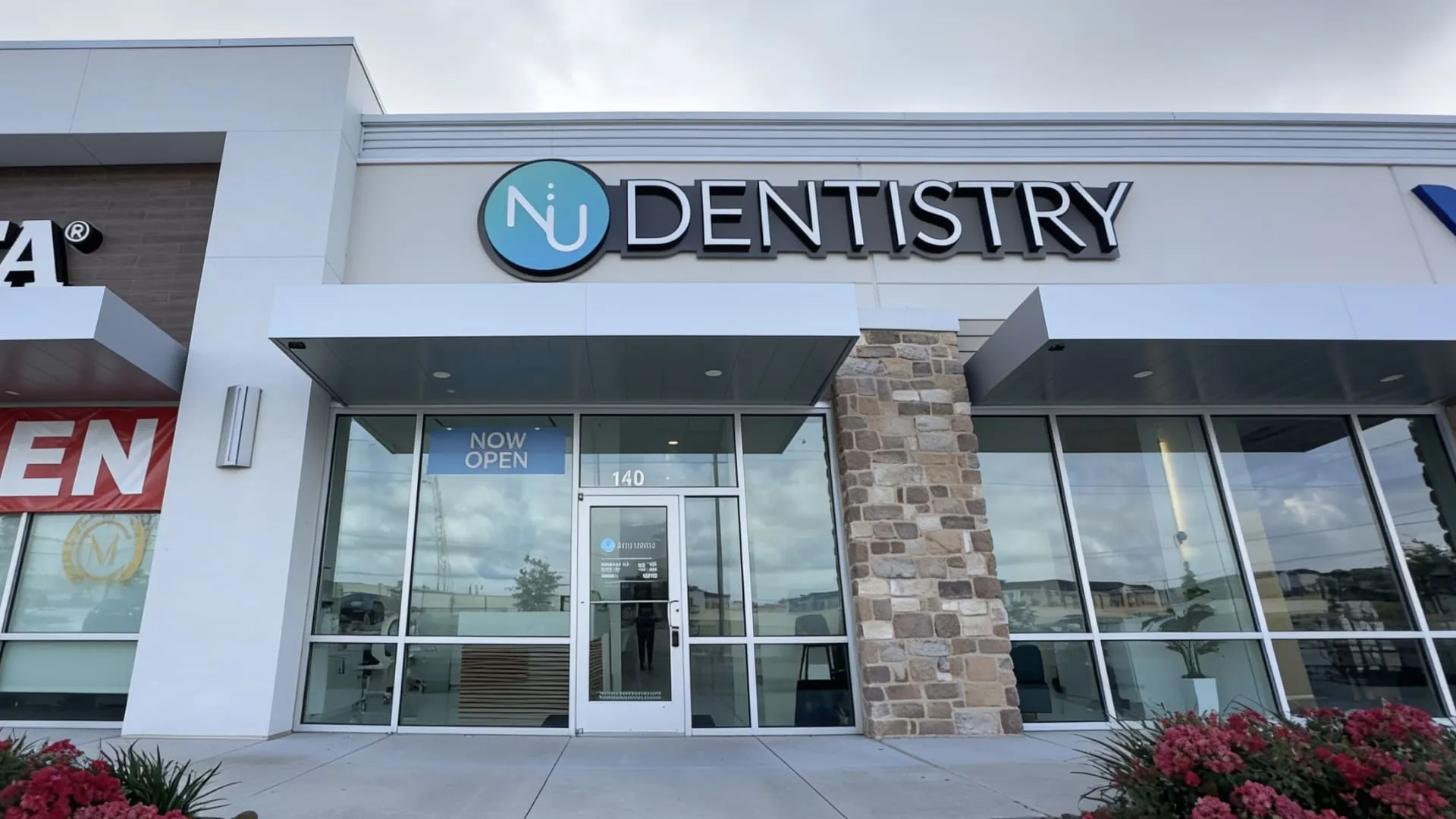
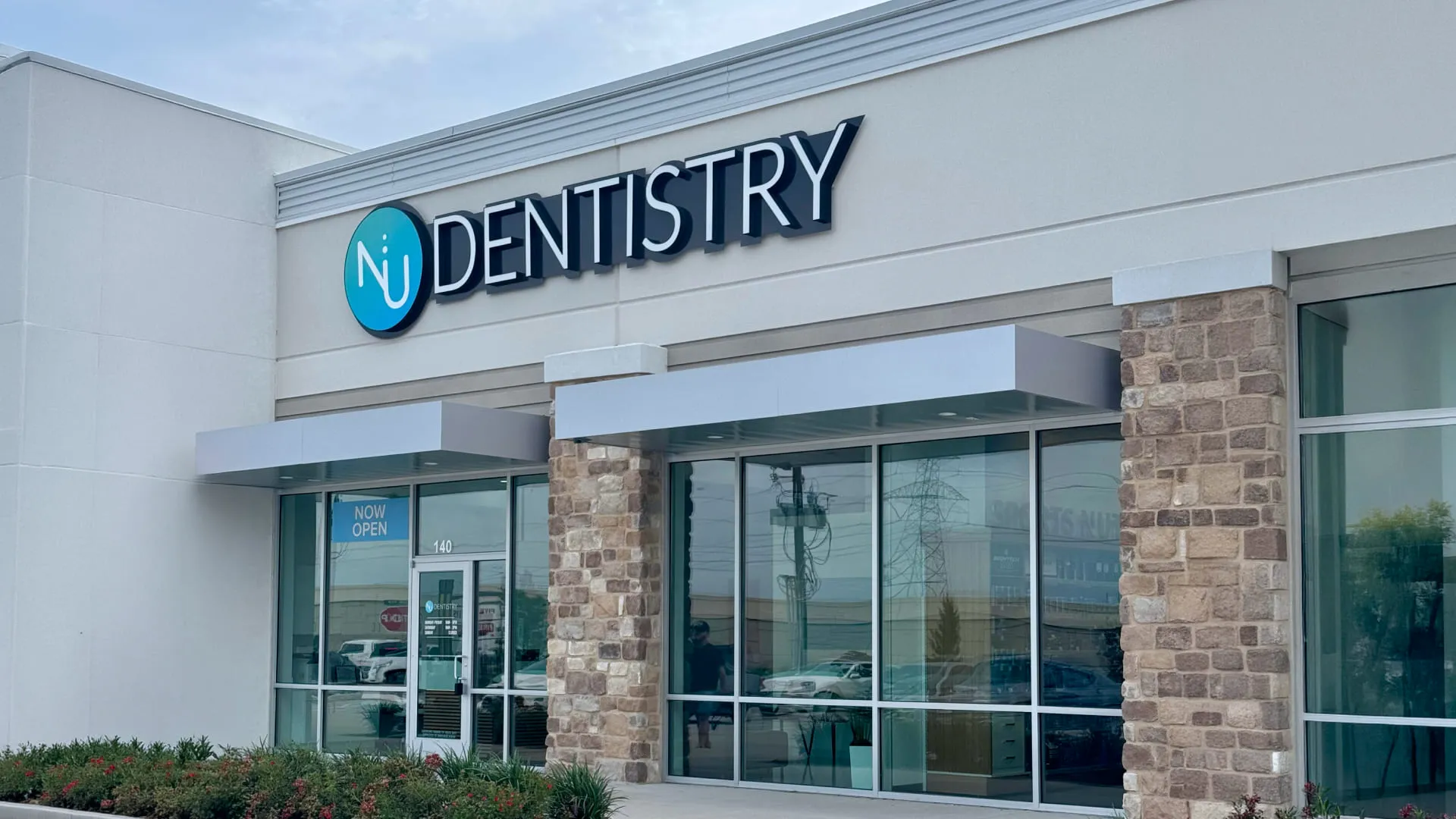
At Nu Dentistry Richmond, we walk every patient through the real-world details of Invisalign treatment — not just the brochure version. Richmond-area patients have questions about eating, wear time, and what to expect day to day, and we're here to answer all of them before your first tray ever goes in.
Contact us to schedule a consultation and find out if Invisalign is the right fit for your smile goals.
Medical disclaimer: This article is intended for general informational purposes only and does not constitute medical or dental advice. Always consult a licensed dental professional for guidance specific to your oral health needs.


Tuesday 9-6pm
Thursday 9-6pm
Saturday 9-2pm
11115 W Grand Parkway S, Suite 140, Richmond, TX 77407
5706 San Felipe St Ste B-300, Houston, TX 77057
23227 Gosling Rd., Suite B, Spring, TX 77389
8940 Barker Cypress Rd., Cypress, TX 77433
3201 N. Shepherd Dr. Suite 113, Houston, TX 77018
8145 Highway 6, Building B #200, Missouri City, TX 77459
PATIENT TESTIMONIALS Richmond, TX
What People Are Saying After Visiting Us


CARING DENTISTS Richmond, TX
OUR SOCIALS
Check Us Out and Follow Our Social Media Accounts