
Spark vs. Invisalign: Which Clear Aligner Is Actually Better?
Spark vs. Invisalign: Which clear aligner is actually better for you? Compare costs, comfort, and results. Book your smile consultation in Richmond today!
Read More

Cosmetic Dentistry, Teeth Straightening
Medically Reviewed by Dr. Ali Tameemi
Invisalign aligners create a few surprises most patients don't expect — staining on composite attachments, gum irritation from tray edges, and temporary speech changes. Understanding why each happens makes them far easier to manage.
Most patients worry about yellowing their clear plastic trays from coffee or tea. Here's the counterintuitive truth: the trays are replaced every one to two weeks, so surface discoloration on the plastic barely matters. According to Healthline, aligners should be rinsed every time they're removed and cleaned nightly with a soft-bristled brush and clear liquid soap — a routine that keeps temporary tray staining under control.
The permanent risk sits elsewhere. Most Invisalign cases involve composite resin attachments — small tooth-colored buttons bonded directly onto your teeth that help the trays grip and apply precise pressure. Unlike the disposable plastic trays, these attachments stay bonded for the entire treatment, which can span six months to two years.
Composite resin is porous. Hot coffee and tea are especially problematic because heat opens microscopic surface channels in the resin, allowing tannins to absorb deeply rather than sitting on the surface. Once tannin pigments penetrate the composite matrix, routine brushing won't reverse the discoloration.
A practical protocol if you drink coffee or tea:
The takeaway: protect the composite buttons as carefully as you protect your natural enamel, and the trays will take care of themselves.
Gum friction from Invisalign is one of the most underreported discomforts, partly because it comes down to manufacturing details most patients never hear explained.
Aligners are manufactured with two different edge styles. Scalloped margins follow the natural curve of the gumline, trimming close to where each tooth meets soft tissue. Straight-cut margins extend further over the free gingiva — the soft, unattached gum tissue just above the tooth — to increase tray retention. Straight-cut trays grip better, which helps with treatment precision, but the flat plastic edge can press into or rub against delicate gum tissue, especially during the first few days after switching to a new tray.
A WebMD overview on clear aligners notes that orthodontic treatment for adults can involve more soft tissue sensitivity than in younger patients, partly because adult gum tissue is more mature and less forgiving of mechanical friction.
If a specific edge is causing consistent irritation, there's a safe DIY approach: using a clean, fine-grit emery board, very gently buff the rough border with short strokes parallel to the edge — never perpendicular, which can create new sharp points. Orthodontic wax applied over an irritating edge also provides immediate relief without altering the tray's shape.
Do not trim the tray with scissors or nail clippers. Cutting changes the structural integrity of the margin and can reduce the retention force the aligner needs to move your teeth as planned. If smoothing and wax don't resolve the problem, contact your provider — they can professionally finish the edge without compromising treatment.
Healthline's research on Invisalign chewies also points out that aligner chewies help seat trays fully, which can reduce the gap between tray edge and gum tissue that causes rubbing. Biting on a chewie for a few minutes after insertion is a simple step that improves fit and reduces soft tissue friction simultaneously. If you're concerned about gum disease gingivitis developing alongside aligner irritation, it's worth raising with your provider early.
Nearly every general resource on Invisalign acknowledges that some users develop a temporary lisp. What they don't explain is why certain cases produce much more severe speech disruption than others.
Standard aligner plastic adds a thin layer to the back of the front teeth and the palatal surface. For most patients, the tongue adapts within a few days. The problem becomes significantly worse in cases involving lingual bite ramps — raised plastic ridges built into the upper aligner's palatal surface to prevent the lower teeth from biting down and cracking the tray. These ramps are common in patients being treated for deep bites. To understand more about this aspect of treatment, see what to expect during lingual braces treatment in Richmond TX.
Bite ramps substantially reduce the retro-incisal space — the narrow gap between the back of the upper front teeth and the tongue. This space is critical for producing lingual-alveolar fricative sounds: /s/, /z/, /sh/, and /zh/. When the ramp occupies that space, the tongue can't find its habitual contact point, and sibilant sounds become distorted.
Healthline's overview on Invisalign effectiveness notes that aligners are worn 20 to 22 hours per day — meaning your tongue has almost no break from navigating the altered palatal anatomy.
Speech-language pathologists use targeted phonetic drilling to help patients retrain tongue placement against new oral structures. A practical starting routine:
Most patients with standard aligners adapt within 48 to 72 hours. Those with lingual bite ramps may need a full week of deliberate practice. If a severe lisp persists beyond two weeks, mention it at your next appointment — ramp height can sometimes be adjusted without compromising bite correction. It's also worth reviewing when refinements are needed with Invisalign trays in Richmond TX to understand when mid-treatment adjustments make sense.
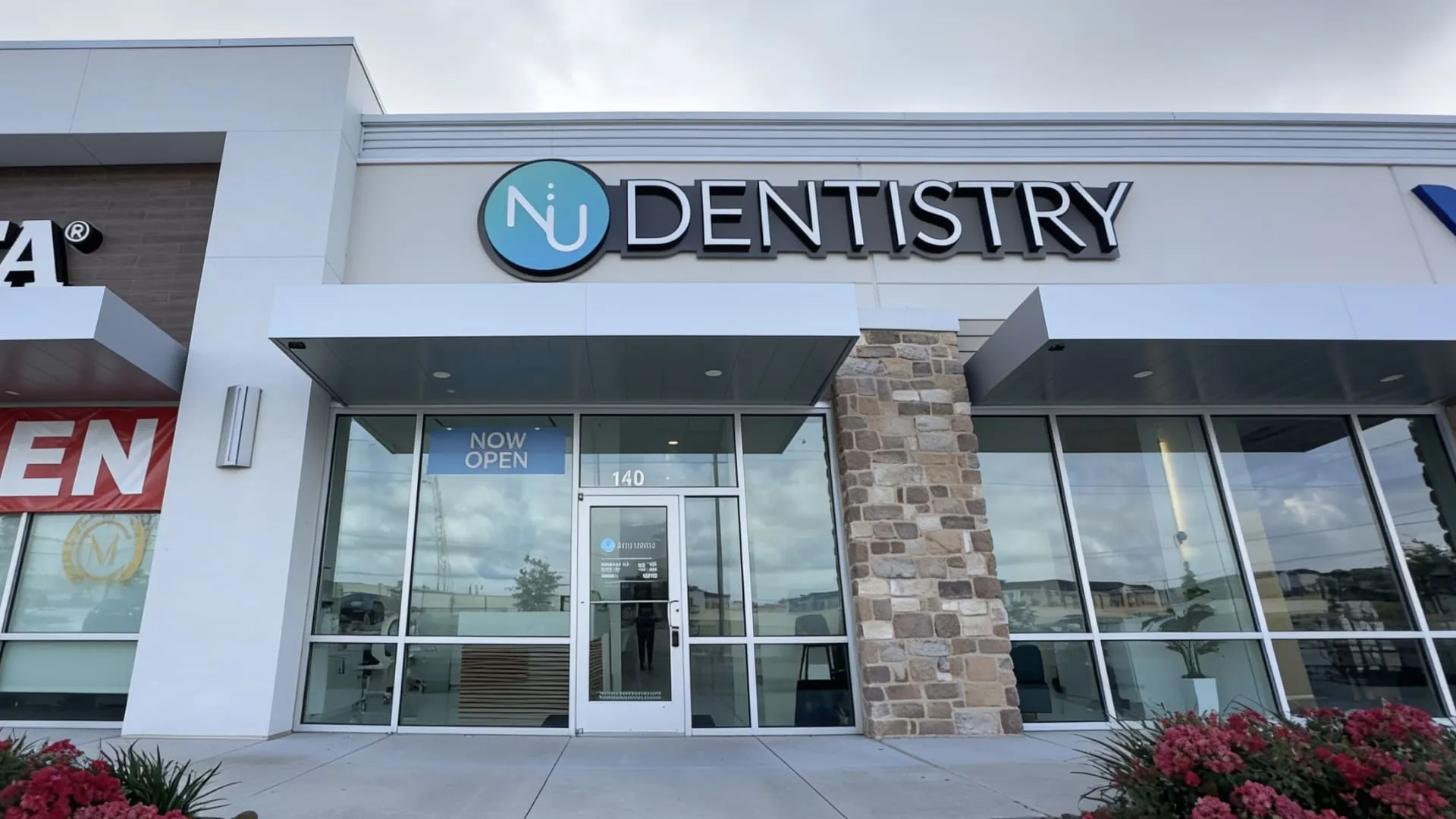
If you're weighing Invisalign and want honest answers about what treatment actually feels like day to day, the team at Nu Dentistry Richmond is ready to help. Serving Richmond, Texas, and the greater Houston area, we walk every patient through the specifics of their case — attachments, tray margins, bite ramps, and all — before treatment begins. Check out our dental offer to get started, and reach out to schedule your consultation.
Medical disclaimer: This article is for informational purposes only and does not constitute medical or dental advice. Always consult a licensed dental professional for diagnosis and personalized treatment recommendations.






Tuesday 9-6pm
Thursday 9-6pm
Saturday 9-2pm
11115 W Grand Parkway S, Suite 140, Richmond, TX 77407
5706 San Felipe St Ste B-300, Houston, TX 77057
23227 Gosling Rd., Suite B, Spring, TX 77389
8940 Barker Cypress Rd., Cypress, TX 77433
3201 N. Shepherd Dr. Suite 113, Houston, TX 77018
8145 Highway 6, Building B #200, Missouri City, TX 77459
PATIENT TESTIMONIALS Richmond, TX
What People Are Saying After Visiting Us


CARING DENTISTS Richmond, TX
OUR SOCIALS
Check Us Out and Follow Our Social Media Accounts